
Status as of 16 November 2026. Ecuador’s El Niño committee (ERFEN) says this event could reach “very strong or extraordinary” intensity, comparable to 1982 to 1983 and 1997 to 1998. That is an outlook, not a final classification. Ocean warming is expected to peak between now and December, and the biggest effects on the Coast and in the Galápagos are expected from November through March. We refresh this box every month or when something changes.
The short answer is yes: you can still travel during El Niño in Ecuador, but this year the answer depends on where your itinerary goes and how it is built. The heaviest rain and flooding are on the coast and in parts of the Galápagos, especially Santa Cruz, where Baltra Airport briefly suspended operations at the end of October. Quito, the Andes, and the Amazon are running, with wetter afternoons and slower roads. A few Galápagos visitor sites are closed, and the warm sea changes the wildlife and the snorkeling.
Here is our latest summary for a well-informed Ecuador and Galápagos trip.
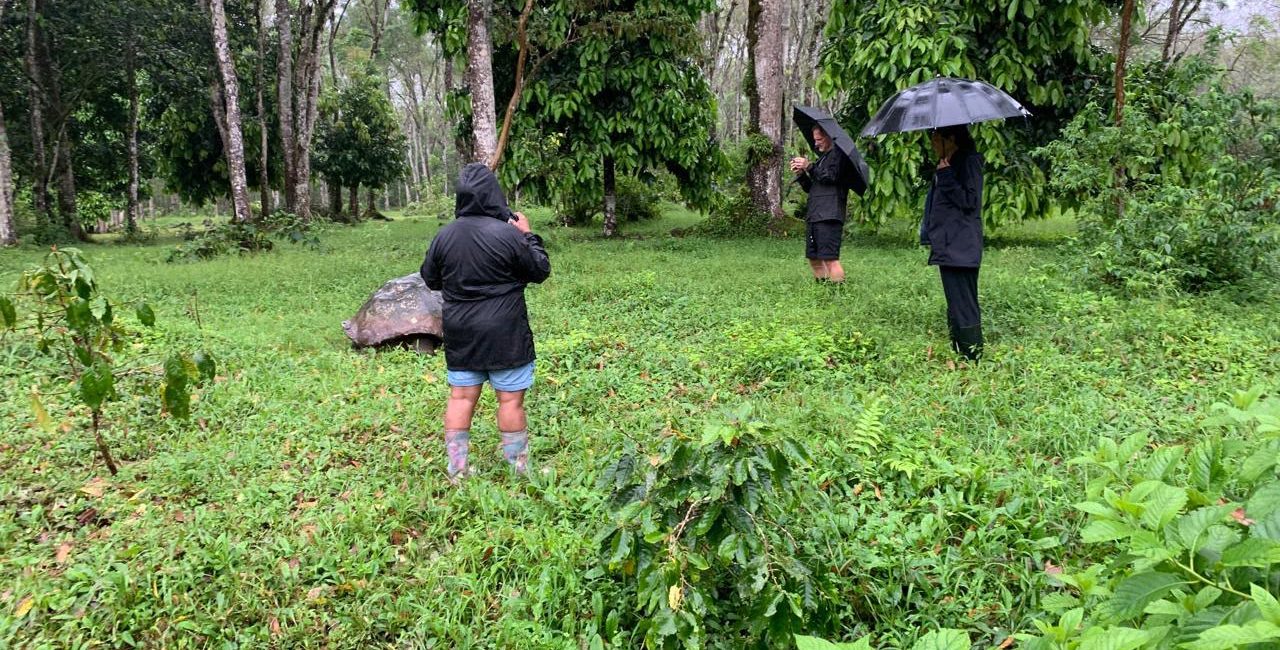
El Niño is a natural event in the Pacific that happens every few years. It changes the water temperature and where and how much rain falls. Ecuador sits on the part of the ocean that warms first, so the Coast and the Galápagos feel it most, while the Andes and the Amazon feel it much less.
The numbers this year are unusual. ERFEN reports eastern Pacific surface water up to 5.4 °C (nearly 10 °F) above normal over the last 15 days, and central Pacific water 3.4 °C (about 6 °F) above normal. Sea level is up to 47 cm (about 18 inches) above normal around the Galápagos.
On land, four coastal places, Guayaquil among them, were on track for their wettest October on record as of late October. Between 1 October and 4 November, Ecuador logged 806 rain-related events that affected thousands of people.
NOAA’s Climate Prediction Center expected, in its 8 October discussion, a strong to very strong El Niño through January to March 2027. ERFEN puts the strongest ocean warming in November and December and the biggest impact from November to March, which overlaps Ecuador’s standard rainy season. The high tide periods to watch are 8 to 11 December, which matters for drainage in coastal cities at sea level.
The Coast is where the damage is. October brought 107 river overflows nationwide, led by Guayas (20), El Oro (19), Esmeraldas (18) and Los Ríos (18). In Guayaquil, heavy rain and a Guayas River swollen by high tides can together make it hard for storm water to drain.
For travelers, the practical problem is the roads. The western slope of the Andes, where roads drop toward the coast, has the highest risk of landslides and flooding.
What this means for your plans: if your trip includes Guayaquil, Montañita, Puerto López or Manta, fly instead of driving between the highlands and the lowlands this season. A five hour drive through Los Ríos can easily become a full day. If a coastal stop is optional, this is the year to shorten it.
If you are flying on to the Galápagos, remember that international travelers usually arrive in Guayaquil first. Guayaquil’s airport has stayed operational, and when storms hit, flights have been paused and delayed as needed. Most problems come from delayed transfers caused by street flooding in the city. We strongly suggest arriving a day early and staying close to the airport. For extra peace of mind, you can also change your flights so that you fly to the islands from Quito instead.
You might be interested in: Is Ecuador Safe to Travel in 2027?
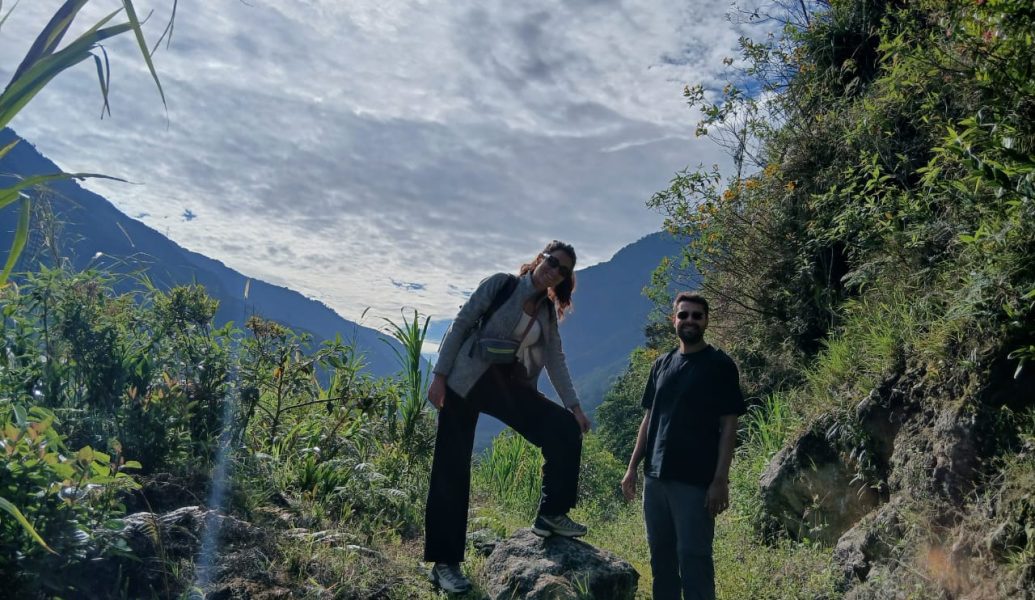
Quito, Cotopaxi, Quilotoa, Otavalo, Mindo, Guaranda, Baños and Cuenca are not where El Niño hits hardest. You will get more rain than usual. Quito had two heavy downpours at the end of October that flooded specific areas of the city, and nobody can say whether that will happen again, so add buffer time to your plans. Mindo is rainier and mistier than usual but remains operational.
ERFEN’s river forecast through 18 November flags rising rivers near the western foothills, mainly in Cañar and Azuay and also in Pichincha, Cotopaxi and Bolívar. Those are the slopes that face the coast. The highland days of a typical itinerary still run normally.
The weather follows a pattern that matters more this season: clear mornings, with cloud and rain building after midday and lasting longer than usual. Do volcano viewpoints, crater walks and markets early, and keep afternoons flexible. Quito sits at 2,850 m (about 9,350 ft), so a slower, earlier day also helps you adjust.
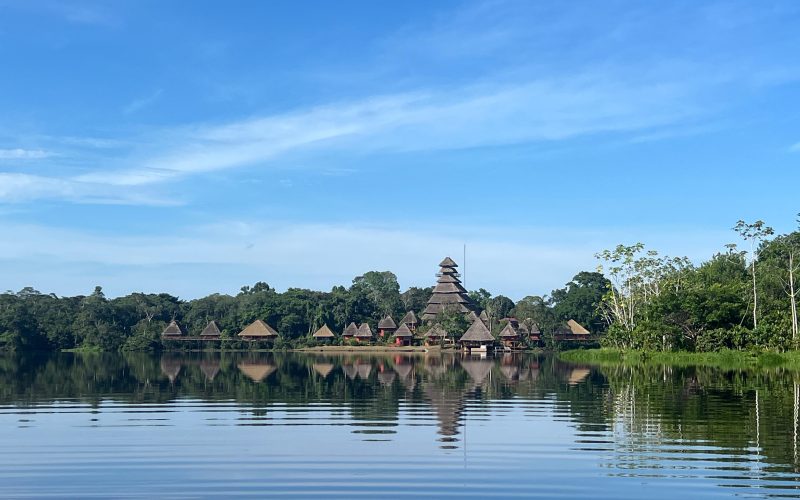
Yes, with a slower drive in. ERFEN expects slightly below normal rain in the Amazon this month. Our team was in the region on 6 November and found it hotter and more humid than usual, still raining, but a little less than in a normal rainy season.
The roads are the real issue. On the Baños to Puyo route, one of the two lanes is usually closed somewhere along the way, which adds about an hour and a half to the usual drive. We leave earlier to get onto the road before traffic builds at the single lane sections. The road to Lago Agrio, where the Cuyabeno lodge tours start, often has landslides, and the last one was registered on 29 October. Most tourist buses are now taking the alternative route through Baeza, Loreto and El Coca to Lago Agrio; which will add aroud 2-3 hours more to your journey.
Landslides are usually cleared immediately, but they can still delay you a couple of hours, so arrive in Lago Agrio the day before if you can.
Our suggestion: pack for heat more than for rain but still bring a rain jacket, plan the active parts of the day early, and watch your hydration, since humidity tires people out more than rain does. Your first afternoon may shift: a guided walk planned for 3 pm might happen the next morning, with the rest of the program unchanged.
Yes, the Galápagos Islands remain open. The warm, rainy season normally starts around January, and this year it arrived early. Baltra recorded 196.4 mm (7.7 inches) of rain on 30 October. Santa Cruz was declared in emergency, Baltra airport suspended operations on 31 October until around 1 pm, and Puerto Ayora flooded quickly, partly because Santa Cruz has no drainage system.
ERFEN expects above-normal rain in the islands in November. The National Park’s circular of 5 November shows these places open: La Lobería and Punta Carola on San Cristóbal, and Playa El Garrapatero on Santa Cruz. Closed: Puerto Chino and Playa Baquerizo on San Cristóbal, Las Grietas, El Chato and El Puntudo on Santa Cruz, and Los Humedales on Isabela.
What we changed in our itineraries: With the Wetlands trail on Isabela closed, we offer a choice between the Sierra Negra volcano hike and the Isabela highlands, with giant tortoises at a local farm, El Sucre cave and an organic family farm. In a wet year the highlands are deep green and the tortoises are easier to find.
Around Baltra, we ask travelers to arrive before 11:00 and depart after 1:00 pm, so a morning closure does not wreck the day. And whichever airline you use, do not book your international flight home on the same day you leave the Galápagos. Leave a night in Quito or Guayaquil as a buffer.
You might be interested in: How to Enter the Galápagos Islands: fees, steps, and what to expect.
Warm water sounds like good news for snorkeling… and for temperature, it is. Our travelers report a pleasant time in the water, with no need for a wetsuit.
However, in the Galápagos, cold water feeds everything. When the sea warms, the nutrient-rich water that supports plankton and small fish weakens, and the animals that depend on it struggle.
The Charles Darwin Foundation notes that marine iguanas depend on algae and can lose weight, and in severe events, die. It expects corals to be among the biggest losers: in 1982 to 1983, Galápagos reefs suffered an estimated 97% mortality.
Penguins show it most clearly. They delay breeding when food is scarce, and in the two strongest recent events the population fell by 77% (1982 to 1983) and 65% (1997 to 1998).
Local fishermen report that fish have already moved deeper, so penguin sightings on Isabela and around Bartolomé will be less reliable this season, and sea lions and seabirds may find less food near the surface.
The upside is on land. Rain turns the highlands of Santa Cruz, San Cristóbal and Isabela deep green, and land birds such as Darwin’s finches tend to breed heavily in wet years. You will see a greener, more active Galápagos above the waterline and a quieter one below it.
If a specific sighting is the reason for your trip, tell us before you book, so we can say plainly what is realistic.
As in any other season, we cannot guarantee wildlife sightings, since this is a national park where animals move and interact at their own rhythm. That said, our travelers this month have reported excellent wildlife sightings. The Galápagos is, after all, a resilient place.
Questions for any operator, including us:
• Is there any buffer time considered? An itinerary with no slack between the Galápagos and your international flight is a risk in any year. This year it matters more.
• What happens if there are delays on my trip? A morning road closure is the realistic risk, not a full cancellation. Tight morning arrivals and same day departures are best avoided.
• Which trails are closed, and is there an alternative? Closures are normal in a wet year. What matters is whether the replacement was planned before you arrived or improvised that morning.
What to check with your insurer
Travel insurance covers the unexpected, and once an event has been publicly forecast, insurers often treat it as foreseeable. Allianz, for example, states that once a storm is named or identified by a recognized forecasting body, policies bought afterwards will not cover related losses. El Niño is not a named storm, but it has been forecast since March 2026 and was officially declared in August, so assume some insurers will argue that delays or cancellations caused by El Niño rain were foreseeable.
Ask in writing before you pay: “Would you cover a cancellation or delay caused by El Niño-related rain or flooding in Ecuador, given that the event was declared before I bought this policy?”
Two things hold either way.
Medical cover is not affected by foreseeability, and that is the main reason to have insurance in Ecuador. And check evacuation cover specifically: medical facilities in the Galápagos are limited. Private clinics often ask for payment upfront, so call your insurer’s assistance line before going to a clinic and keep every receipt and medical report.
Is it safe to travel to Ecuador during El Niño? For most tourist itineraries, yes. The highlands, the Amazon, and the Galápagos are operating with adjustments. The real risks are overland travel through the coastal provinces, closed Galápagos sites, and tight flight connections around Baltra. A well-built itinerary considers all three. Our Ecuador safety guide covers the official advisories.
Is the Galápagos open during El Niño? Yes, with changes. Baltra airport suspended operations briefly after record rain at the end of October, and a few visitor sites on San Cristóbal, Santa Cruz and Isabela are closed. Most itineraries still run, with swapped sites and extra buffer around flights. Ask your operator for the current closure list and its plan B.
Does travel insurance cover El Niño disruptions in Ecuador? Possibly not for cancellations or delays. El Niño was forecast and declared before many policies were bought, so some insurers treat related disruption as foreseeable. Ask your insurer in writing before you pay. Medical and evacuation cover are not affected by foreseeability, so check the evacuation limit.
Does El Niño change the choice between a Galápagos land tour and a cruise? Rain and closures affect both. A land based trip can swap a closed site for another on the same day and sleeps on shore if weather turns. The trade-off is that inter-island boat crossings are open water, which matters if you get seasick. Ask for the plan B in writing either way. So far, cruise itineraries have run normally; there have been some activities canceled or delayed when the rain is heavy.

